Choosing coloring pages by age: toddlers to tweens
What makes a coloring page right for a 2-year-old, a 5-year-old or a 10-year-old? Line thickness, detail and themes explained by age.
By ColorYoyo · · 5 min read
The same coloring page can delight one child and frustrate another. The difference is rarely the subject. It is the size of the shapes, the thickness of the lines and how much detail is packed in. Here is a simple guide by age. Every child is different, so treat these as starting points.
Ages 2–3: big shapes, thick lines
Toddlers color with their whole arm. They scribble, and that is exactly how it should be: it builds the grip and arm control they will need later.
- One large object per page: a ball, a fish, a car.
- Very thick outlines that are easy to see and hard to miss.
- Chunky crayons or washable markers that are easy to hold.
Ages 4–5: simple scenes
Around this age many children start trying to stay inside the lines and choose colors on purpose: the sky is blue, the grass is green.
- A main character with a few background elements, like a cat with a ball and a window.
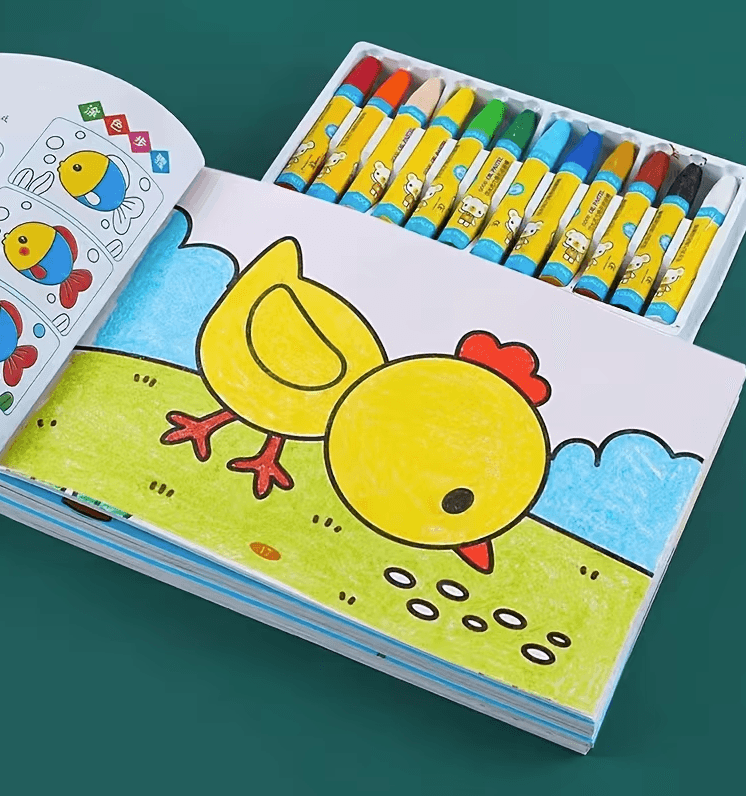
- Medium-thick lines and shapes about the size of a coin or bigger.
- Favourite themes: animals, vehicles, dinosaurs, princesses, their own family.
Let them pick the page. Choosing the subject is half the fun, and children stick with a page they chose themselves.
Ages 6–8: more detail and stories
Fine motor control is improving fast. Children enjoy patterns, small details and pages that tell a little story.
- Full scenes: a farm, an underwater world, a city street.
- Thinner lines and smaller areas to fill.
- Colored pencils join the crayons for finer work.
Ages 9 and up: patterns and challenge
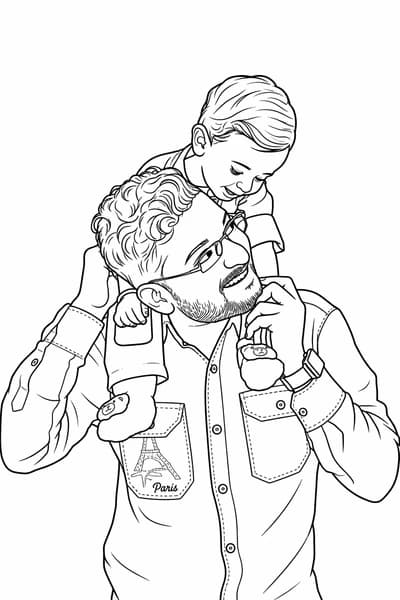
Older children often like complex pages: mandalas, detailed animals, comic-style scenes or pages based on their own photos. Some like to shade, blend and experiment with markers.
A quick check
- Can the child see where one area ends and the next begins?
- Are the smallest areas big enough for the tools they use?
- Will they finish in one sitting, or does the page invite coming back to it?
If a child keeps abandoning pages, try simpler ones. If they rush through them, try something more detailed. The right page is the one they want to finish.